Stamped vs. plain concrete: which is right for your project?
How stamped concrete differs from plain broom-finished concrete in look, installation, slip resistance and maintenance — so you can pick the right finish.
5 min read · Updated ·
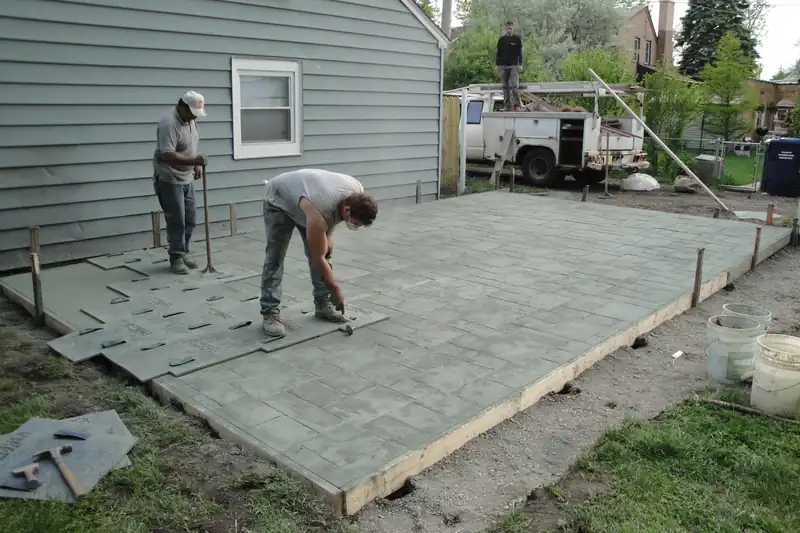
Both start as the same concrete. The difference is what happens in the hour or two after it is placed — and what you do to maintain it afterward.
Plain (broom-finished) concrete
The slab is floated, edged, jointed and dragged with a broom to leave fine ridges for traction. It is the standard for driveways, sidewalks and utility pads: quick to install, easy to repair and naturally slip-resistant outdoors.
Stamped concrete
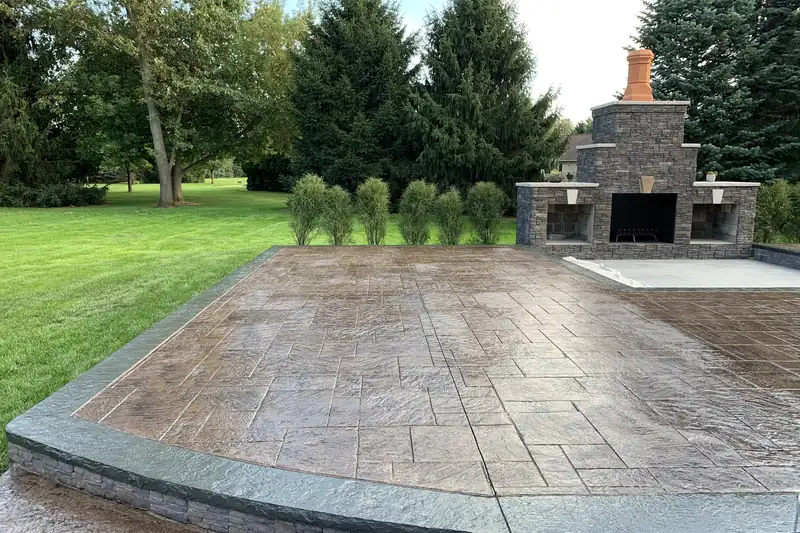
After floating, color is added (integral color in the mix and/or a color hardener on the surface), a release agent is applied, and textured mats are pressed into the surface to mimic stone, brick, slate or wood. Timing is critical: stamp too early and the pattern slumps, too late and it will not take an impression. That is why stamping is usually a job for a crew with decorative concrete experience.
How they compare
- Look: stamped gives the appearance of pavers or stone in one monolithic slab; plain is simple and uniform.
- Installation: stamping needs more labor, materials and a tighter finishing window.
- Traction: a sealed, smooth stamped surface can be slicker when wet; ask for a slip-resistant additive in the sealer for pool decks and steps.
- Maintenance: stamped concrete is normally sealed and resealed periodically to protect the color — follow the sealer maker’s schedule. Plain concrete can be sealed too, but often isn’t.
- Repairs: patches on stamped and colored concrete are harder to match.
Both still crack
Stamping does not stop shrinkage cracking. Control joints are still needed — a good installer hides them in the pattern’s grout lines.
Choosing an installer
Ask to see finished work of the same pattern, how they handle color consistency between trucks, which sealer they use and how often it needs reapplying. Our guide to choosing a concrete contractor covers licensing, insurance and written estimates.
Common questions
Is stamped concrete slippery?
Sealed stamped surfaces can be slick when wet. Many installers add a fine anti-slip grit to the sealer for pool decks, steps and ramps.
Do I have to seal stamped concrete?
Sealing is standard for stamped concrete to protect color and texture, and it is reapplied periodically. Follow the specific sealer manufacturer’s guidance.
Sources
General information only. Codes, soils and climates vary — check your local building department and follow product instructions.