Pouring and curing concrete in cold weather
What counts as cold weather for concrete, why fresh concrete must not freeze, and practical ways to protect a pour with blankets, heated mixes and timing.
6 min read · Updated ·
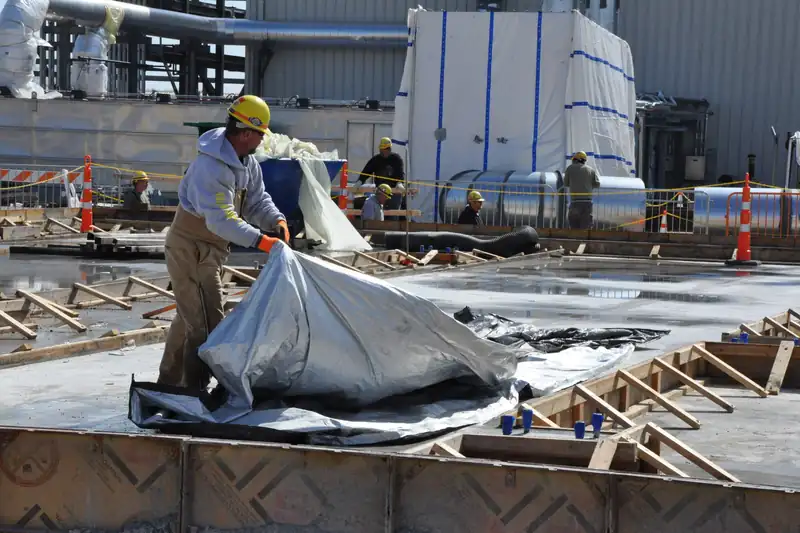
Concrete can be placed in winter, and cold-cured concrete can end up very strong — if it is protected early. The danger is freezing before the concrete has gained enough strength.
What counts as “cold weather”
The American Concrete Institute’s cold-weather guide (ACI 306R) says cold-weather conditions exist when the air temperature has fallen to, or is expected to fall below, 40°F (4°C) during the protection period. Watch the overnight forecast, not just the temperature at pour time.
Why freezing early is so damaging
Water in fresh concrete expands when it freezes and can permanently weaken it. ACI advises protecting new concrete from freezing until it reaches about 500 psi compressive strength; if it will be exposed to repeated freeze–thaw cycles while saturated, the recommended threshold is much higher (about 3,500 psi).
Before the pour
- Never place concrete on frozen ground, snow or ice. Cover the subgrade with insulated blankets ahead of time if needed.
- Ask the ready-mix plant about a winter mix: heated water, an accelerating admixture (non-chloride where there is steel reinforcement) or a higher-early-strength mix.
- Schedule the pour for the warmest part of the day and have blankets on site before the truck arrives.
After the pour
- Cover with insulated curing blankets as soon as finishing allows; keep edges and corners covered — they lose heat fastest.
- If you use heaters in an enclosure, vent combustion heaters to the outside. Exhaust in an enclosure is a carbon-monoxide hazard and can damage the fresh surface.
- Do not let the concrete dry out under heat — it still needs moisture to cure.
- Leave protection on longer than you would in summer; strength gain slows sharply in the cold.
Know when it is strong enough
On larger jobs, field-cured cylinders or maturity sensors from a materials testing lab show when protection can come off. For a home project, follow your supplier’s advice and err on the side of more time covered.
Common questions
What temperature is too cold to pour concrete?
There is no single cut-off. Under ACI 306R, cold-weather precautions apply when air temperature falls, or is expected to fall, below 40°F during the protection period. Concrete can be placed in colder weather with proper heating and protection.
How long must new concrete be protected from freezing?
Until it reaches about 500 psi compressive strength, per ACI guidance. How long that takes depends on the mix and temperatures — often a day or more in cold conditions.
Sources
General information only. Codes, soils and climates vary — check your local building department and follow product instructions.