Concrete testing basics: slump, air and cylinders
What a slump test, air test and compression cylinders tell you about your concrete, when testing is required, and how to find a materials testing lab.
4 min read · Updated ·
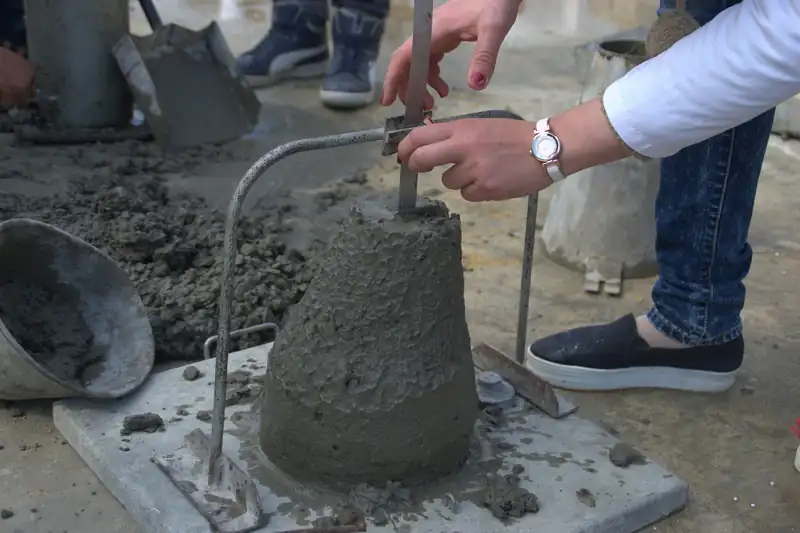
On commercial work, concrete is tested as it arrives and again weeks later. Knowing what the tests mean helps on any project with an inspector, an engineer or a dispute.
Slump (workability)
The slump test (ASTM C143) fills a cone with fresh concrete, lifts it away and measures how far the concrete sags. It checks consistency against what was ordered — a much higher slump than specified can mean extra water, which lowers strength.
Air content
For air-entrained concrete exposed to freezing, technicians measure air content on site (for example with a pressure meter, ASTM C231) to confirm it is in the specified range.
Strength cylinders
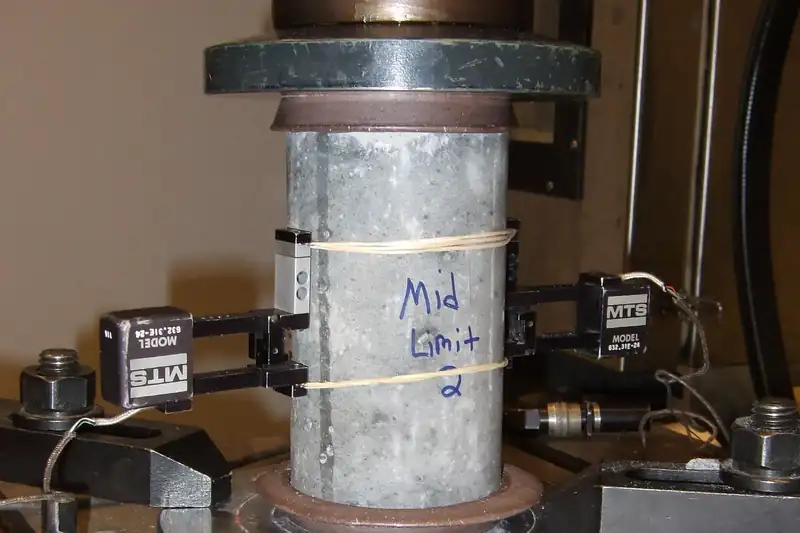
Technicians cast cylinders from the delivered concrete, cure them under standard conditions and crush them in a lab (ASTM C39). Results are compared against the specified strength, commonly at 28 days, with earlier breaks (such as 7 days) used to track progress.
When you need a lab
Testing is usually required by the project specifications, a building official or an engineer — common on commercial work, structural elements and public projects. Labs also test soil compaction, aggregates and asphalt. Find materials testing labs near you.
Common questions
What does a slump test measure?
It measures the consistency or workability of fresh concrete (ASTM C143). It is a quick check that the load matches what was ordered.
When are concrete cylinders tested?
Commonly at 28 days for acceptance, with earlier tests (for example at 7 days) to monitor strength gain, as set by the project specification.
Sources
General information only. Codes, soils and climates vary — check your local building department and follow product instructions.