Gravel bases for concrete slabs, patios and pavers
Why concrete needs a firm, uniform base, which gravel to use, how to compact it in lifts, and how to order base rock by the ton.
5 min read · Updated ·
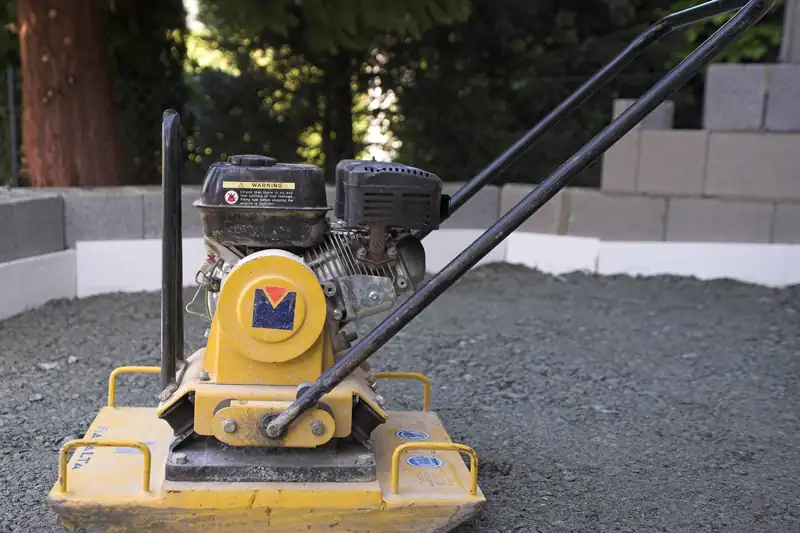
Concrete is strong in compression but cracks when the ground under it settles unevenly. A well-compacted granular base gives the slab uniform support and helps water drain away.
Use crushed, angular rock
Crushed rock with a mix of sizes and fines (often sold as base rock, road base, crusher run or a local DOT base gradation) locks together when compacted. Rounded pea gravel rolls under load and does not compact into a firm base. Names vary by region, so describe the job to the quarry or yard.
How thick?
Base thickness depends on your soil, climate and what the slab carries. Light patios and walks often use a few inches; driveways and poor or wet soils need more. Your local building department or a contractor who knows your soil is the best guide.
Compact in lifts
Plate compactors and jumping jacks are standard items at equipment rental yards.
- Remove topsoil, roots and soft spots; compact the native soil first.
- Spread base rock in layers of a few inches at a time.
- Lightly moisten and run a plate compactor over each layer in overlapping passes until it no longer visibly moves.
- Check grade with a string line, then add the next layer.
Ordering base rock
Gravel is usually sold by the ton, while your measurements give cubic yards (length × width × depth in feet ÷ 27). Ask the supplier for its tons-per-yard conversion for that material — it varies with the rock and moisture — and order a little extra for compaction. Dump truck services can deliver and spread loads; ask whether they can tailgate-spread to save shovel work.
Under the concrete
Once the base is compacted and graded, set forms and reinforcement, then pour. See how to pour a small slab.
Common questions
Can I pour concrete directly on dirt?
Some small slabs are placed on well-compacted native soil, but a compacted granular base gives more uniform support and drainage and is the more common practice. Follow local code requirements.
Is pea gravel good under concrete?
Rounded pea gravel does not interlock or compact well. Crushed angular base rock is the usual choice.
Sources
General information only. Codes, soils and climates vary — check your local building department and follow product instructions.