Concrete driveway basics: thickness, base, joints and care
What goes into a durable concrete driveway: base, thickness for your vehicles, air-entrained concrete in freeze–thaw climates, joints, curing and winter care.
6 min read · Updated ·
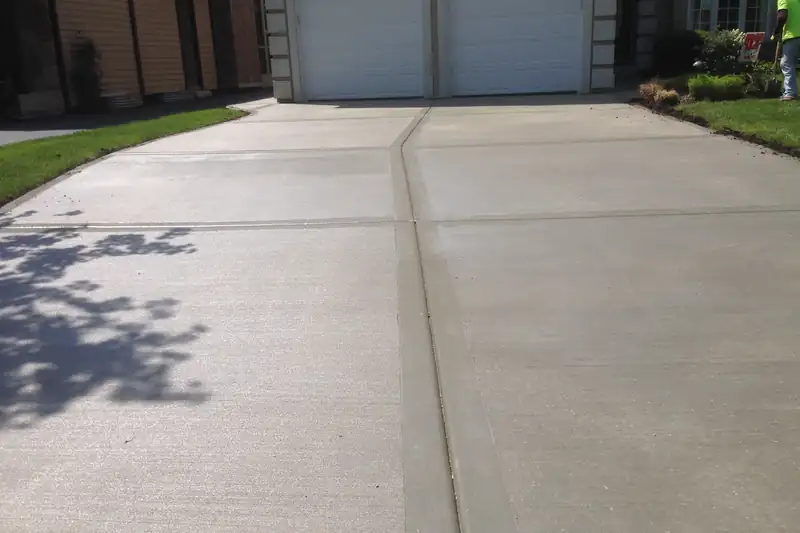
A driveway carries vehicle loads, weather and in many places deicing salt. A long-lasting one comes down to the base, the mix and the joints.
Base and drainage
Driveways need firm, uniform support and a slope that drains water away from the garage and house. Soft or wet spots should be dug out and replaced with compacted base rock — see gravel bases.
Thickness
Four inches is common for passenger cars; thicker sections are typical where heavier trucks, RVs or delivery vehicles will drive or park, and at the apron where the driveway meets the street. Your city may set apron and curb-cut requirements — check before you pour.
The mix
In freeze–thaw climates, exterior flatwork is normally air-entrained concrete: tiny air bubbles give freezing water room to expand. Model residential codes set higher minimum strengths for exposed slabs in severe-weathering regions. Tell the ready-mix supplier it is for an exterior driveway and they will suggest an appropriate mix.
Joints and reinforcement
Control joints keep shrinkage cracks in straight lines; plan them so panels are roughly square. Isolation joints separate the driveway from the garage slab, house foundation and sidewalk. Rebar or mesh helps hold cracks tight but does not prevent them.
Curing and first use
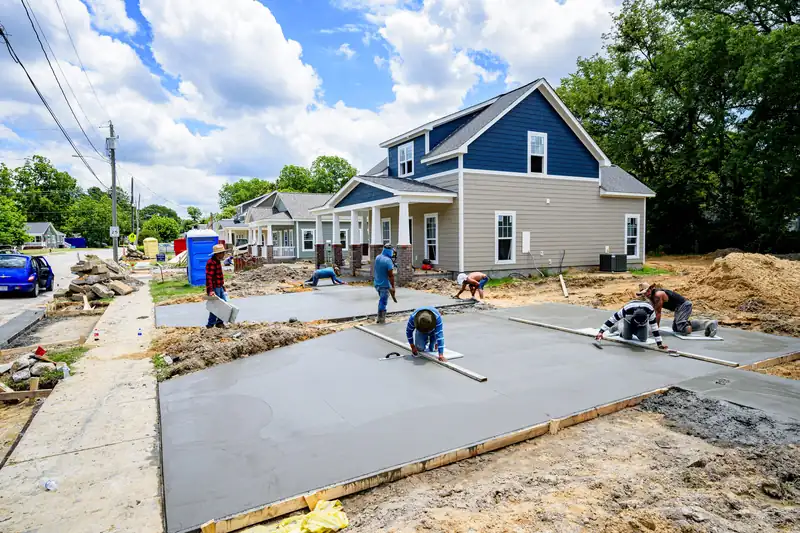
Keep the new driveway moist or covered with a curing compound for the first several days. Ask your contractor when it can take foot traffic and vehicles — heavy vehicles should wait longer than cars.
Winter care
- Avoid deicers in the first winter if possible, and never use ammonium-based products; sand gives traction without chemicals.
- A penetrating sealer can help resist water and salt.
- Shovel rather than chip ice off the surface.
Old driveway first?
Breaking out and hauling the old slab is often part of the job. Demolition & recycling companies can crush old concrete for reuse as base.
Common questions
How thick should a concrete driveway be?
Four inches is common for passenger vehicles; heavier vehicles call for thicker concrete. Local codes and your contractor’s assessment of your soil should decide the final design.
Should driveway concrete be air-entrained?
In climates with freeze–thaw cycles, air-entrained concrete is standard for exterior flatwork because it resists freeze–thaw damage and scaling.
Sources
General information only. Codes, soils and climates vary — check your local building department and follow product instructions.