Concrete patio cost, including stamped patios
Compare broom-finished, colored, stamped and exposed-aggregate patio costs with sourced public-works checks and labeled finish premiums, plus the decorative cost calculator.
6 min read · Updated ·
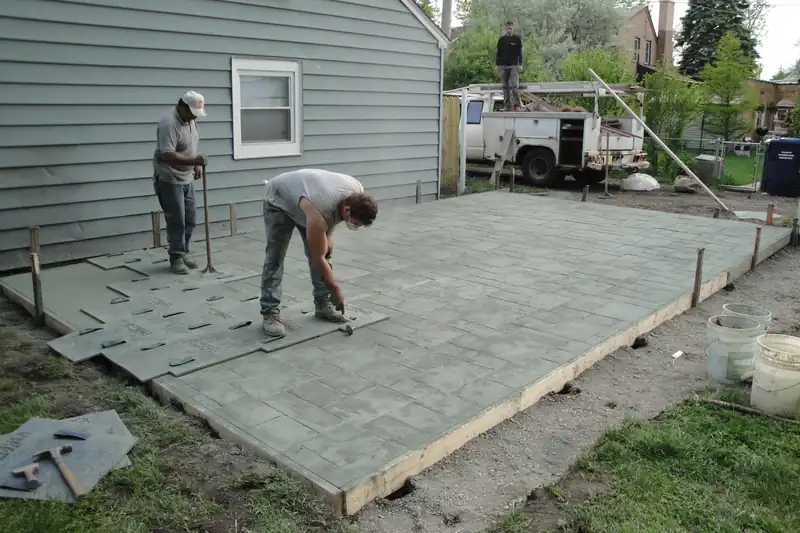
A patio is usually a 4-inch walk-on slab, but the finish is what most people are really pricing. A broom-finished pad, a colored slab, an exposed-aggregate surface and a stamped “stone” patio are different jobs on pour day — and they age and get maintained differently.
Start with the slab, then add the finish
The concrete volume is the same math as any pad: length × width × thickness (in feet) ÷ 27, plus a little waste. The patio yardage guide and the slab calculator walk through that. Four inches is the common thickness for a walk-on patio; go thicker under a hot tub, a masonry fireplace, or anything heavy, and follow local code.
For a planning price on the slab itself, the same public-works cross-check used on our driveway cost guide applies: Florida DOT’s 2025 average bid for 4-inch concrete sidewalks and driveways was $68.76 per square yard, about $7.64 per square foot. That is a Florida public-project figure, scaled to your state in the calculator. It is a reference point, not a quote for a backyard patio.
Side-by-side: broom, color, stamped and exposed aggregate
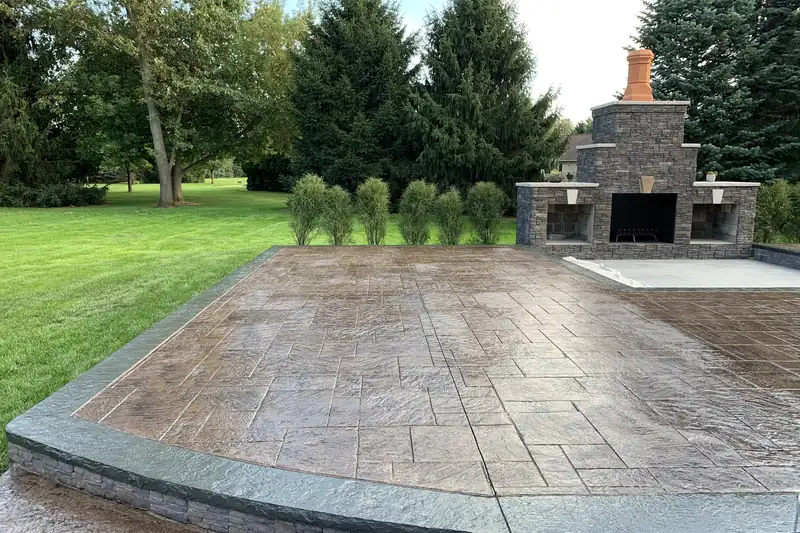
The stamped, colored and polished cost calculator below can include a new 4-inch slab or price the finish only. The finish add-ons in that tool are starting estimates, not public bid averages, because there is no single national series for decorative work:
- Broom / plain — the standard outdoor finish: fast, easy to repair, naturally slip-resistant when wet. This is the slab price without a decorative premium.
- Integral color — a starting estimate of $1.50 per square foot on top of the slab, for color mixed into the concrete.
- Exposed aggregate — a starting estimate of $3 per square foot extra, for washing the surface to show the stone. It is often chosen for traction.
- Stamped — a starting estimate of $6 per square foot extra for the pattern work; stamped plus color stacks both premiums. Stamped concrete is normally sealed and resealed. Read stamped vs. plain concrete before you decide — this page does not repeat that comparison.
What else changes the number
Site access, steps, curves, borders, demolition of an old patio, and a poor or wet base all move a bid more than the difference between two similar finishes. Labor is a large share of decorative work because the finishing window is short. Use the calculator, pick your state, then get written estimates from decorative concrete contractors or contractors near you. Our hiring checklist still applies: license, insurance, and a scope that names thickness, base, finish and sealer.
Outdoor living pads and fire-pit pads
Many 2026 patio designs add a larger outdoor-living pad or a separate pad for a fire pit or built-in seating. Those are still concrete slabs — size them with the same yardage math — but a wood-burning fire pit may need a non-combustible surround and a setback from the house set by your local fire code, and the pad under a heavy masonry or steel pit should be thicker than a walk-on patio. Ask the building department and the installer; do not treat a regular 4-inch patio section as a given under a concentrated load.
Common questions
How much does a stamped concrete patio cost?
It is the slab plus a decorative premium for the pattern, color and sealer, and it needs a crew that stamps often. The calculator uses a starting estimate of $6 per square foot for stamping, on top of the slab, and $1.50 per square foot for integral color. Replace those with a local quote.
Is a broom-finished patio cheaper?
Usually, yes — less labor and no decorative materials. It is also easier to patch later and typically has better wet traction unless a slip-resistant additive is used in a stamped sealer.
Do I have to seal a stamped patio?
Sealing is standard for stamped and colored work to protect the color and texture, and it is reapplied periodically. Follow the sealer maker’s schedule, or plan coats with the sealer calculator.
Sources
General information only. Codes, soils and climates vary — check your local building department and follow product instructions.