How much does a concrete driveway cost?
A plain-English guide to concrete driveway cost: thickness, base, reinforcement, finish, labor, tear-out and access — with the ConcreteNear cost calculator embedded and sourced public-works price checks.
7 min read · Updated ·
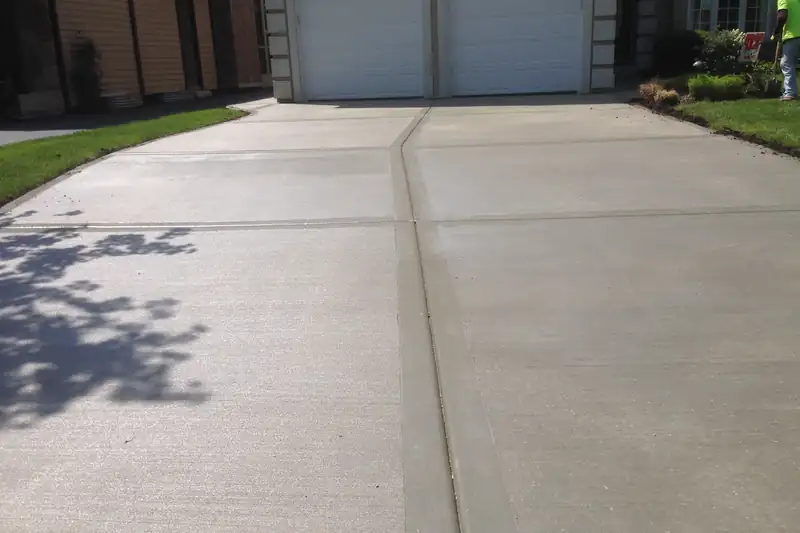
“How much does a concrete driveway cost?” is one of the questions people type all winter, while they plan a spring pour. There is no honest single national price. What you can do is take the job apart — concrete, base, steel, finish, labor, tear-out, access — and put planning numbers on each line, then get written estimates from local contractors.
Use planning numbers, not a made-up average
The concrete driveway and slab cost calculator embedded below uses the same public sources as the rest of ConcreteNear’s estimators. Material and installed prices start from public bid averages (Florida DOT 2025 item average unit costs), USGS and NRMCA ready-mix data; wages from the U.S. Bureau of Labor Statistics (OEWS, May 2025). State adjustments use BEA Regional Price Parities (2024). Anything without a public series is labeled as a starting estimate you can edit.
One public-works cross-check, not a residential quote: Florida DOT’s 2025 average bid for 4-inch concrete sidewalks and driveways was $68.76 per square yard, about $7.64 per square foot (156 contracts). The 6-inch item averaged $104.10 per square yard, about $11.57 per square foot (194 contracts). Those are Florida public-project prices, scaled in the calculator to your state. A backyard driveway with decorative work, tight access, or a tear-out will not match a highway-agency bid.
For the concrete itself, NRMCA’s Performance Benchmarking Survey reported an average 2023 U.S. selling price of $160 per cubic yard at the plant — before delivery, short-load, wait-time and fuel fees.
What moves a driveway bid
- Size and thickness. Four inches is common for passenger cars; thicker sections are typical for heavier vehicles and at the street apron. See driveway basics. A 24 × 20 ft driveway at 5 inches is about 7.4 cubic yards before waste; most crews order a little extra.
- Base and drainage. Soft spots, extra excavation and more base rock add trucking and compaction time. Gravel bases and the gravel calculator help you size that work.
- Reinforcement. Wire mesh or a rebar grid is a line item. It helps hold cracks tight; it does not prevent them.
- Finish. A broom finish is the standard. Integral color, stamped patterns and exposed aggregate add labor and materials — the calculator includes those as labeled starting estimates. If you are comparing a patio, see concrete patio cost and stamped vs. plain.
- Tear-out. Breaking and hauling the old slab is often a large share of a replacement job. Use the demolition calculator and browse demolition and recycling.
- Access. If a truck cannot chute the pour, a pump and extra labor show up on the estimate. Tight lots, slopes and overhead wires all matter. Ask contractors and ready-mix plants about access when you call. Find crews near you.
- Labor and schedule. Wages in the calculator are BLS means, marked up by an editable factor so they resemble a billed crew rate, not a take-home wage. Decorative work and bad weather both slow a crew down.
How to use the estimate
Enter your length, width and thickness, choose a base and finish, and add tear-out if you are replacing a slab. Pick your state or ZIP so prices adjust. Then replace any line with a number from a local quote. Get more than one written estimate with the same scope — our contractor checklist explains what should be on the page. These results are planning estimates, not a bid and not engineering advice.
Common questions
How much does a concrete driveway cost per square foot?
It depends on thickness, finish, tear-out, access and your market. As one public reference, Florida DOT’s 2025 average bid for 4-inch concrete sidewalks and driveways was $68.76 per square yard (about $7.64 per square foot). Use the calculator with your state and local quotes rather than a single national average.
What is the biggest cost surprise on a replacement driveway?
Usually the old slab: breakout, haul-off and any base repair underneath. Decorative finishes and difficult access are the other common jumps.
Does the calculator include a permit or a pump?
You can add a pump in the tool. Permits, inspections, landscape repair and unexpected poor soil are not in the default total — ask your contractor what is included.
Sources
- Florida DOT Historical Item Average Unit Cost 2025 (items 0522 1 and 0522 2)
- NRMCA Performance Benchmarking Survey — average selling price per cubic yard
- BLS Occupational Employment and Wage Statistics, May 2025, 47-2051 Cement Masons and Concrete Finishers
- U.S. Bureau of Economic Analysis, Regional Price Parities by State (via FRED)
General information only. Codes, soils and climates vary — check your local building department and follow product instructions.