Hire a licensed builder · Not a DIY guide
Pool resurfacing and replastering
When a concrete pool needs a new interior, what plaster, quartz and pebble finishes typically last (per the National Plasterers Council), and why draining and replastering is a job for a specialist.
6 min read · Updated ·
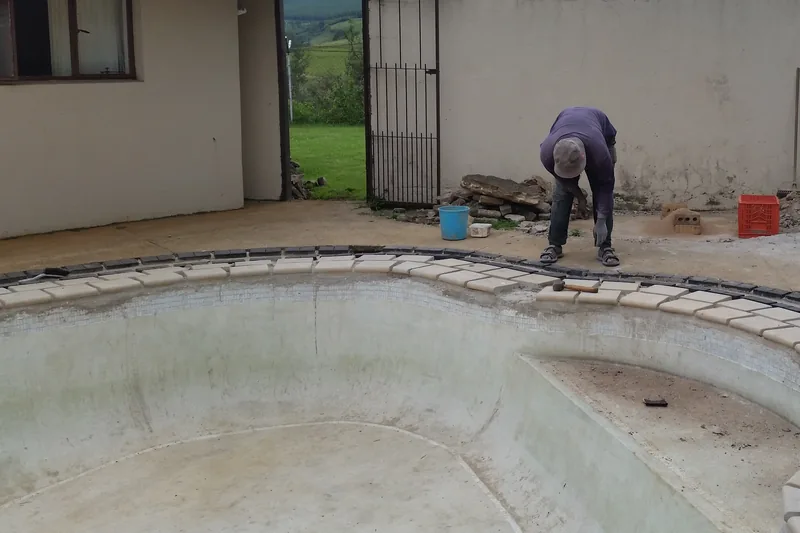
The shell of a concrete pool can last for decades. The interior finish does not. When plaster wears through, delaminates, or can no longer be honestly patched, you want a swimming-pool plastering crew — the same specialty that finishes a new pool — not a general handyman and a bag of patch.
What the finish is doing
The interior is a cementitious coating placed in one campaign over the shell: traditional plaster, quartz (silicate aggregate) finishes, pebble aggregate, or a polished aggregate system. The National Plasterers Council is clear that this is a specialized mix, placed and finished in a single application, and that it should be installed by people who do this work. Color, texture and additives vary; the product name belongs in the contract.
How long finishes typically last
A finish at the end of its life is not a moral failing. It is wear. Staining you can live with is not the same as a surface that is coming off in sheets, exposing the shell, or opening cracks that collect dirt and make chemistry harder to hold.
| Finish (NPC) | What it is | Typical surface life |
|---|---|---|
| Traditional (white plaster) | Classic hard-troweled cementitious finish; economical | 5 to 8 years |
| Quartz | Quartz / silicate aggregate, often colored; smooth to textured | 10 to 15 years |
| Pebble | Small pebbles and other aggregates exposed in the finish; more texture | 12 to 18 years |
| Polished | Aggregate finish, polished smooth | 8 to 12 years |
These are NPC planning ranges, not warranties. Water chemistry, start-up, and climate all affect the result. HomeGuide’s 2026 concrete-pool guide speaks more generally of resurfacing every 10 to 15 years at $6,000 to $15,000; Angi has mentioned resurfacing projects in a $10,000 to $20,000 band in its in-ground cost FAQ. Get a local plastering bid on your square footage and product.
When to call a professional
Spot repairs have a place. They are not a substitute for a resurface when the whole interior is worn. A pool builder or a plastering specialist should inspect in person before anyone quotes a full strip and redo.
- Widespread etching, softness, or rough aggregate standing proud because the paste is gone.
- Hollow-sounding or delaminated areas, or patches that keep failing.
- Cracks that are opening, leaking, or too extensive to treat as a spot repair.
- A surface you are considering draining “for a few months” to think about it — see below.
- A new pool whose finish failed early: that is a warranty and workmanship conversation, not a DIY recost.
What the crew will do (and what you should not)
A typical replaster involves draining under a plan, preparing or removing the old surface, repairing the shell as needed, placing the new finish, and filling immediately so the new surface does not dry out. Startup chemistry is as important as it was on day one. This is messy, skilled, wet work with a short finishing window — the reason you hire a plastering company that does pools every week.
Do not leave a concrete pool empty for a long stretch without professional advice. HomeGuide’s 2026 concrete-pool guide warns that a shell left empty can crack or even be moved by groundwater pressure (the pool can “pop”). If the pool must be down for repairs, follow the contractor’s plan for water-table relief and a prompt refill.
Hiring and planning
Ask for recent interiors of the same product, in writing: surface preparation, product name, cure and fill, startup, and the warranty. Chemistry will appear in that warranty; keep your water in the ranges the manufacturer and the NPC-type care instructions require. Find specialists through pool-work listings and shotcrete and gunite contractors, and confirm that plastering — not only new construction — is work they actually do.
Common questions
How often does a concrete pool need to be replastered?
The National Plasterers Council lists typical surface lives of 5 to 8 years for traditional white plaster, 10 to 15 years for quartz, and 12 to 18 years for pebble, with polished systems around 8 to 12 years, when the finish is installed and cared for. Your water and climate may shorten or stretch that.
How much does resurfacing cost?
HomeGuide’s 2026 concrete-pool guide cites $6,000 to $15,000. Angi has cited a higher $10,000 to $20,000 band for resurfacing in its in-ground cost FAQ. Size, product, repairs to the shell, and access drive the bid.
Can I drain the pool and wait until next year to replaster?
That is a bad plan without a contractor’s advice. An empty concrete shell can be damaged by drying and by groundwater pressure. If the pool must be empty, it should be under a written plan and refilled as soon as the work allows.
Sources
General information for hiring a professional. Codes, soils and climates vary — check your local building department and follow the contract and product instructions. This is not a do-it-yourself guide. Written with 25 years in concrete, from Oregon City, Oregon.