Hire a licensed builder · Not a DIY guide
How a concrete swimming pool is built
What a licensed crew actually does when they build a concrete pool — design and permits, excavation, steel, plumbing, gunite or wet shotcrete, curing, tile, interior finish, decking and startup — with a realistic timeline.
8 min read · Updated ·
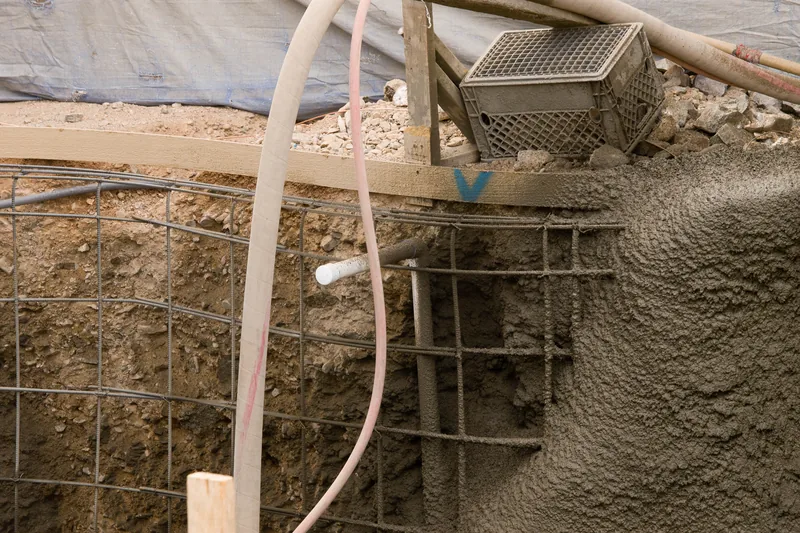
A concrete pool is built on your property, in place, by a licensed crew — not assembled from a kit over a weekend. The shell is sprayed or formed around a steel cage, then finished, decked and started up under inspections. This is a walk through that sequence so you know what you are paying for and what “normal” looks like on a job that is done right. It is not a do-it-yourself guide.
What “concrete pool” usually means
In the pool trade, a “concrete,” “gunite” or “shotcrete” pool is a custom shell built on site. The American Shotcrete Association treats shotcrete as the umbrella word for spraying concrete or mortar, whether the mix is dry or wet. Gunite is the older name for the dry-mix process, where a dry cementitious mixture is blown through a hose and water is added at the nozzle. Wet-mix shotcrete is prepared first — often as ready-mixed concrete — then pumped to the nozzle, where air accelerates it onto the steel.
Sales language is looser than that. Many builders say “gunite” for any sprayed concrete pool. Ask which process they will use, and whether the nozzleman is ACI-certified for that process. Some shells are formed and poured instead of sprayed; that is a different method, still done by a crew, not a weekend project. Compare types in gunite vs. shotcrete vs. fiberglass vs. vinyl.
1. Design, engineering and a written contract
A serious builder will set the shape, depths, steps, benches, any spa, the equipment, the interior finish and the deck before anyone digs. Structural design has to match your soil, slope, water table and local code. On tighter or more complicated lots, expect an engineer in the mix.
The contract should describe the work, the equipment and finishes by name, a payment schedule tied to completed stages, who pulls the permits, and a start and substantial-completion window. California’s Contractors State License Board also requires swimming-pool contracts to include a plan and scale drawing. See how to hire a pool builder for the checklist, and what a concrete pool costs before you compare bids.
2. Permits, locates and site prep
In-ground pools almost always need building, electrical and barrier (fence) approvals — sometimes plumbing or gas as well. Your builder should know the local packet; you still want to know who is responsible for submitting it. Rules for fences and gates are summarized in pool permits and barrier codes. The model International Swimming Pool and Spa Code also calls for construction fencing around an in-ground excavation until the permanent barrier is in.
Have the crew call 811 before they dig. Access for excavators, boom trucks and material deliveries is part of the plan, not an afterthought. Tight side yards, overhead lines and septic or well setbacks change the method and the price. Excavation and site-prep contractors sometimes handle the hole; the pool builder remains the one coordinating inspections.
3. Excavation
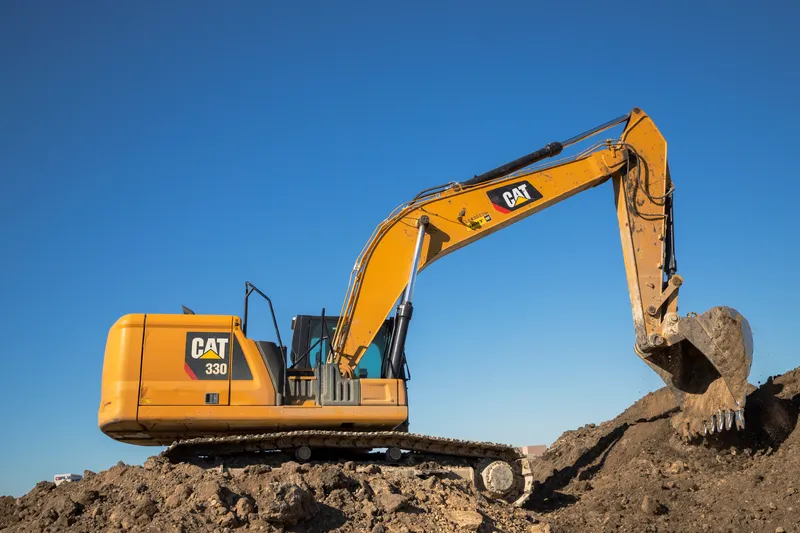
The hole is cut to the designed depths, with benches, steps and a deep end (if you have one) shaped in the dirt. Rock, poor soils, groundwater or buried surprises slow this down and can add shoring, dewatering or extra haul-off. If an old patio or pool is in the way, demolition and recycling comes first.
A good excavation is a clean, stable shape that matches the drawings. It is not something to “fix later” when the steel goes in.
4. Steel, plumbing and inspection
A cage of reinforcing steel is tied to the designed bar size and spacing — the skeleton of the shell. Plumbing lines, skimmer and return stubs, lights and other conduits are set in the excavation so they are cast into the shell, not chased in afterward. A rebar and supplies shop may fabricate the steel; placement on a pool is specialized work.
Many jurisdictions inspect the steel and the electrical bonding before anyone sprays concrete. Do not let a crew bury work that has not been signed off if an inspection is required. That pause is normal, not a delay tactic.
5. The shell: gunite, wet shotcrete, or a formed pour
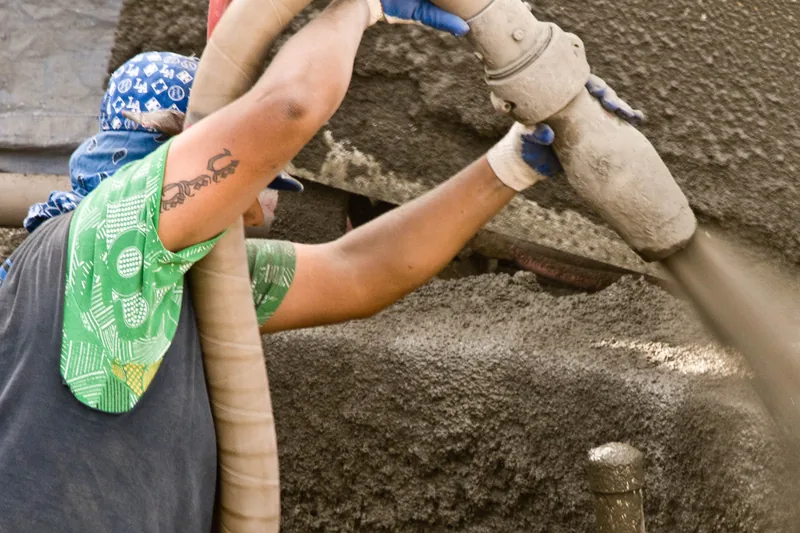
On a sprayed job, a nozzleman and a finishing crew build the walls and floor to the specified thickness, cutting and troweling the surfaces while the material is still plastic. The skill of that nozzleman matters: the American Shotcrete Association notes that dry-mix (gunite) in particular depends on highly skilled nozzle work, especially in thick or heavily reinforced sections. Ask who is on the nozzle, and whether they hold the ACI Shotcrete Nozzleman certification for the process being used.
Ask, too, how rebound — material that bounces off the steel or the wall — will be handled. It should not be shoveled back in as if it were structural concrete. After the spray, the crew shapes and trims the shell; see the photo of a wall being worked before it sets.
Shaping and curing the shell
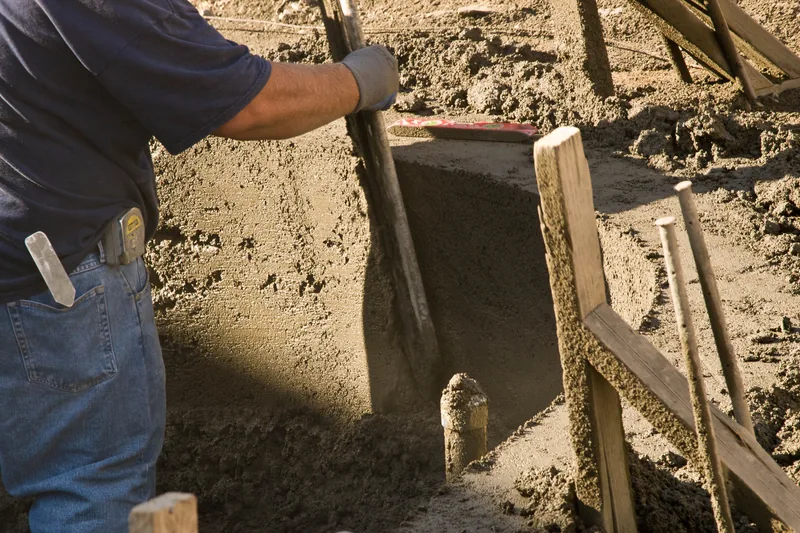
Fresh sprayed concrete has to be kept from drying out too fast: crews commonly damp-cure or otherwise protect the shell for a period the builder should spell out. Published schedules vary — some builders talk about a week or so of curing before tile and deck work, others keep a longer window before the interior finish. Weather, mix and thickness all matter. What you want in writing is the crew’s curing plan, not a promise that “it will be fine.”
A formed-and-poured shell, by contrast, is placed inside temporary formwork and finished from the top of the wall. It is less common for freeform backyard pools in the United States than spraying, but it is a legitimate method in the right design.
6. Tile, coping, equipment and the deck
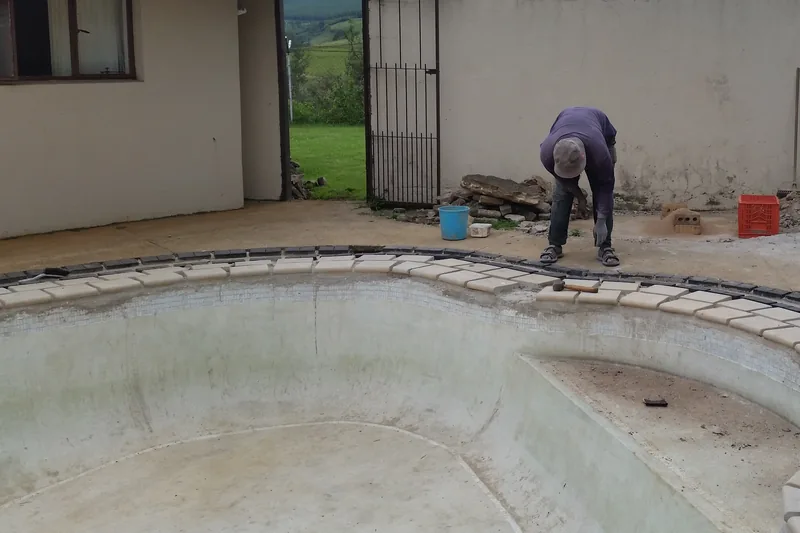
Once the shell can take the work, crews set waterline tile, coping (the cap on the edge) and the pool deck. Coping has to be level, well-bonded and comfortable to sit on; the deck has to drain away from the water and stay reasonably slip-resistant when wet. Electrical equipotential bonding of the perimeter is part of this work, not a decoration. Details live in concrete pool decks, coping and drainage.
The pump, filter, heater or heat pump, and any automation usually sit on a pad during this window. Locate that pad where it can be serviced without becoming a noise problem at the patio.
7. Interior finish, fill and startup
Most U.S. residential concrete pools are finished with a cementitious interior — traditional plaster, quartz, or pebble aggregate — rather than a full tile lining. The National Plasterers Council describes those finishes as a one-shot, specialized placement: you want a pool plastering crew, not a general handyman. Typical service lives, when the finish is installed and the water is cared for, are on the order of 5 to 8 years for traditional white plaster, 10 to 15 years for quartz, and 12 to 18 years for pebble, per the NPC. See resurfacing and replastering.
The pool is filled as soon as the finish is applied so the surface does not dry out. Startup chemistry is a controlled process over the first days; your builder should walk you through it or include a startup service. Final inspections, including the barrier, have to be complete before the yard is treated as a finished pool.
A realistic timeline
- Design & contractOften 1–3 weeks
- PermitsOften 2–6 weeks, sometimes longer
- ExcavationUsually days, longer in rock
- Steel & plumbingDays, then inspection
- Shell & cureSpray in a day or two, then a curing window
- Tile, coping, deckOften 1–3 weeks
- Finish, fill, startupAbout a week, then clearance
There is no single national timetable. Builders who publish schedules often describe about 8 to 16 weeks of active construction after permits, with design and permitting adding weeks or months in front of the first scoop. Some simpler jobs move faster; rock, weather, custom materials, inspection backlogs and busy seasons stretch the calendar. Fiberglass shells, by comparison, are manufactured off site and are typically set faster once the hole is ready — a trade-off explained in the comparison guide.
Ask your builder for a written schedule that starts at contract signing, not just at excavation, and that names the inspection holds. Starting design in the off-season is how many families actually get a summer swim date.
Common questions
How long does it take to build a concrete pool?
Active construction is often described by builders as roughly 8 to 16 weeks after permits, but design, permitting, weather, rock and custom features can make the whole project several months. Get a written schedule from your builder that starts at the contract, not only at excavation.
What is the difference between gunite and shotcrete?
Shotcrete is the general term for sprayed concrete. Gunite is the dry-mix process, with water added at the nozzle. Wet-mix shotcrete is mixed first and then sprayed. Many pool builders use “gunite” loosely for any sprayed shell — ask which process they will use.
When can we swim?
After the interior finish, fill, startup chemistry, and required final inspections (including the barrier). Your builder should give you a clearance, not a guess from a neighbor’s job.
Sources
- American Shotcrete Association — What is the difference between shotcrete and Gunite?
- ACI — Shotcrete Nozzleman certification programs
- National Plasterers Council — Swimming pool resurfacing (finish types and typical surface life)
- Call 811 — Know what’s below
- CSLB — Learn about home improvement contracts (including swimming pool contracts)
General information for hiring a professional. Codes, soils and climates vary — check your local building department and follow the contract and product instructions. This is not a do-it-yourself guide. Written with 25 years in concrete, from Oregon City, Oregon.