Hire a licensed builder · Not a DIY guide
Gunite vs. shotcrete vs. fiberglass vs. vinyl liner pools
A clear comparison of sprayed concrete (gunite and wet-mix shotcrete), fiberglass shells and vinyl-liner pools — how each is built, what you can customize, upkeep, and published cost ranges.
7 min read · Updated ·
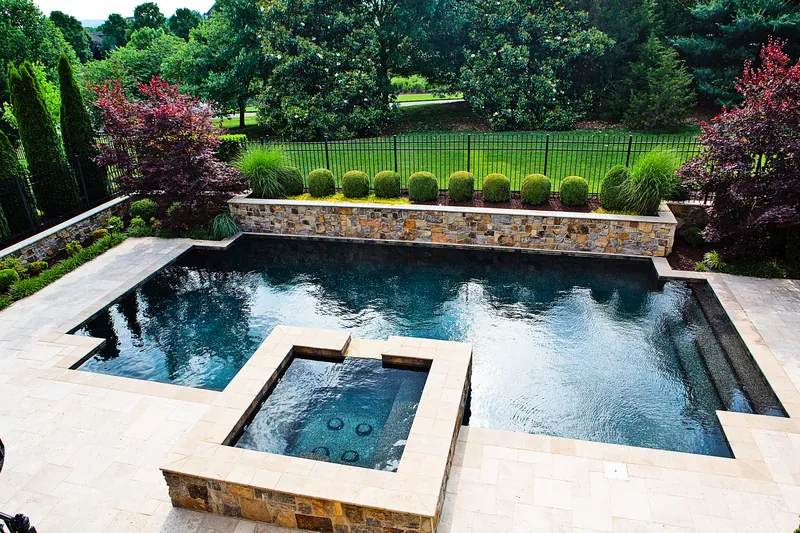
The three common in-ground types in the United States are a custom concrete shell (sprayed or, less often, formed), a factory-made fiberglass shell, and a vinyl liner over a wall system. They are not interchangeable, and “gunite” on a sales brochure does not always mean the same thing as “gunite” in a technical manual. Here is the distinction, so you can hire the right builder.
Start with the words
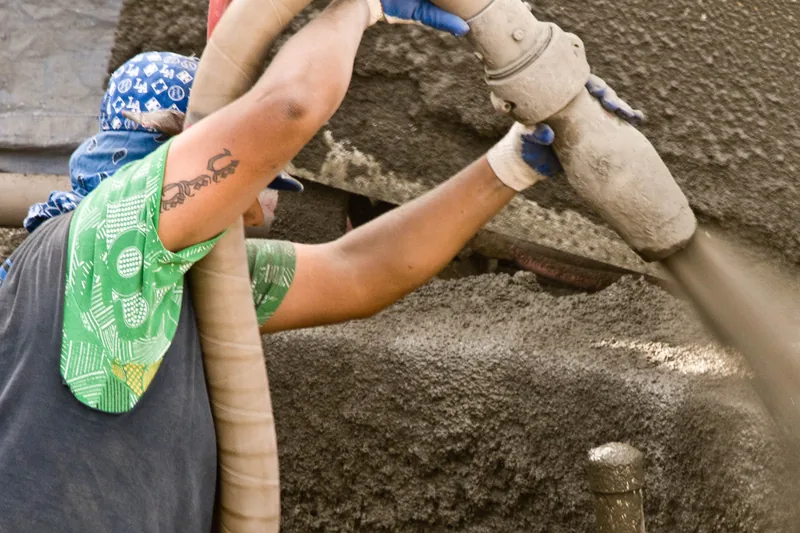
The American Shotcrete Association is plain about this: shotcrete covers all sprayed concrete or mortar, dry-mix or wet-mix. Gunite refers only to the dry-mix process, where a dry blend is blown through a hose and water is added at the nozzle. Wet-mix shotcrete is mixed first — typically as ready-mix — then pumped, with air at the nozzle. ACI has used “shotcrete” for sprayed concrete since at least 1967.
In the backyard pool market, “gunite pool” is often shorthand for any custom sprayed-concrete pool. That is marketing, not a specification. Ask whether the shell will be dry-mix or wet-mix, who is on the nozzle, and whether that person is ACI-certified for the process. Both processes can build a sound pool in competent hands. The construction sequence is the same in outline either way.
Concrete (sprayed or formed) shells
A concrete pool is built in your yard, so the shape, depth, steps, tanning ledges, spas and vanishing edges can be designed to the lot. The shell itself, kept in good condition, is commonly described as lasting many decades — HomeGuide’s 2026 concrete-pool guide says a well-maintained concrete pool can last 50 years or longer. The interior finish does not last that long and has to be renewed; see resurfacing.
The trade-offs are time, cost and upkeep. A custom shell takes longer than setting a fiberglass unit. Published installed ranges for concrete or gunite pools in 2026 cost guides are typically higher than vinyl and often higher than mid-range fiberglass. Concrete interiors also need consistent water care; neglected chemistry shortens the finish, not just the look.
Fiberglass shells
A fiberglass pool is a factory-molded shell delivered by truck and set in an excavated hole, then backfilled and plumbed. You choose from the manufacturer’s shapes and sizes; you do not invent a one-off freeform the way you can in concrete. Builders who publish timelines often describe a faster install than a custom sprayed shell once permits and the hole are ready — commonly a matter of weeks rather than many weeks of staged concrete work — but site access for a large shell can be a hard limit.
HomeGuide’s 2026 guides list typical installed fiberglass ranges in the mid tens of thousands to around $100,000, and describe lower routine maintenance than concrete, with a service life often cited at 25 years or more. Those are planning figures, not a bid. Gelcoat or surface wear, structural warranty terms, and freight or crane access belong in the quote.
Vinyl-liner pools
A vinyl-liner pool uses a wall system (steel, polymer or similar) and a flexible liner that holds the water. It is usually the least expensive in-ground option to install, and the liner is a wear item. HomeGuide’s 2026 concrete-pool comparison says liners commonly need replacement on the order of every 7 to 10 years (one table on the same site rounds that to about 10 years) and lists liner replacement in the low thousands to several thousand dollars, depending on size. Angi’s 2026 in-ground guide puts vinyl installation generally below concrete on price, with higher annual maintenance than fiberglass.
Liners can puncture or wrinkle; they are a poor match for some heavy-use or elaborate edge designs. A competent liner builder is still a licensed contractor, not a kit you “throw in” over a weekend when the pool is in the ground.
How the types compare
Price, speed and custom shape are the usual decision. If you want a one-off outline, an integrated spa, or a vanishing edge, you are usually in concrete. If a standard shape, a smoother interior and a shorter build matter more, fiberglass is often in the running. Vinyl is the budget in-ground path, with a liner you will eventually replace.
| Concrete (gunite / shotcrete) | Fiberglass | Vinyl liner | |
|---|---|---|---|
| How it is built | Custom shell sprayed or formed on site around steel | Factory shell set in an excavated hole | Wall system plus a replacement liner |
| Shape and features | Most flexible: custom depths, spas, edges, ledges | Limited to manufactured molds | More flexible than fiberglass, less than concrete |
| Typical install time after permits | Often many weeks of staged work (commonly described as about 8–16 weeks of construction) | Often faster; commonly described in weeks once the hole is ready | Generally faster than custom concrete |
| Angi 2026 installed range | $65,000–$120,000 | $55,000–$100,000 | $40,000–$75,000 |
| HomeGuide 2026 installed range | $50,000–$120,000 (avg. $85,000) | $45,000–$100,000 | $35,000–$80,000 |
| What wears first | Interior plaster / quartz / pebble, then other finishes | Surface coat; confirm the warranty | The liner (periodically replaced) |
| HomeGuide longevity notes | Shell 50+ years with care; resurface on a cycle | Often cited at 25+ years | Liner replacement about every 7–10 years |
Angi’s in-ground guide was updated October 14, 2026, based on 1,467 verified projects. HomeGuide’s concrete-pool guide is a 2026 page (updated August 27, 2025 on the byline). The two guides do not match exactly; treat them as planning brackets and get written local bids.
Hiring, not shopping a kit
Each type has specialists. A shotcrete and gunite contractor may shoot the shell while a pool builder runs the job; a fiberglass dealer may not be the right crew for a custom concrete edge. Use how to hire a pool builder on any of the three, and confirm license, insurance and a written scope that names the type of shell you are actually buying.
Common questions
Is gunite better than shotcrete?
They are not two different pool “brands.” Gunite is dry-mix shotcrete. Wet-mix is the other shotcrete process. Either can make a sound shell when the mix, the nozzle work and the curing are right.
Which type costs the least to build?
Published 2026 guides generally put vinyl at the low end of in-ground installation, then fiberglass, then custom concrete — with wide overlap. Site work, access and features can overturn that order. Compare written bids on the same size and extras.
Which type lasts the longest?
The concrete shell is the longest-lived structure in these guides when it is maintained; it still needs a new interior finish on a cycle of years. Fiberglass and vinyl have different wear points (the surface coat, the liner). Warranties and care matter more than a marketing lifespan.
Sources
- American Shotcrete Association — What is the difference between shotcrete and Gunite?
- ACI — Shotcrete Nozzleman certification programs
- Angi — How much does an in-ground pool cost? (2026 guide, updated Oct. 14, 2026)
- HomeGuide — How much does a concrete pool cost? (2026)
- National Plasterers Council — Swimming pool resurfacing
General information for hiring a professional. Codes, soils and climates vary — check your local building department and follow the contract and product instructions. This is not a do-it-yourself guide. Written with 25 years in concrete, from Oregon City, Oregon.