Hire a licensed builder · Not a DIY guide
Concrete pool decks, coping and drainage
How to hire the right finish for a pool deck — broom, stamped, exposed aggregate or pavers — plus coping, wet-surface traction, drainage and why electrical bonding of the deck matters.
7 min read · Updated ·
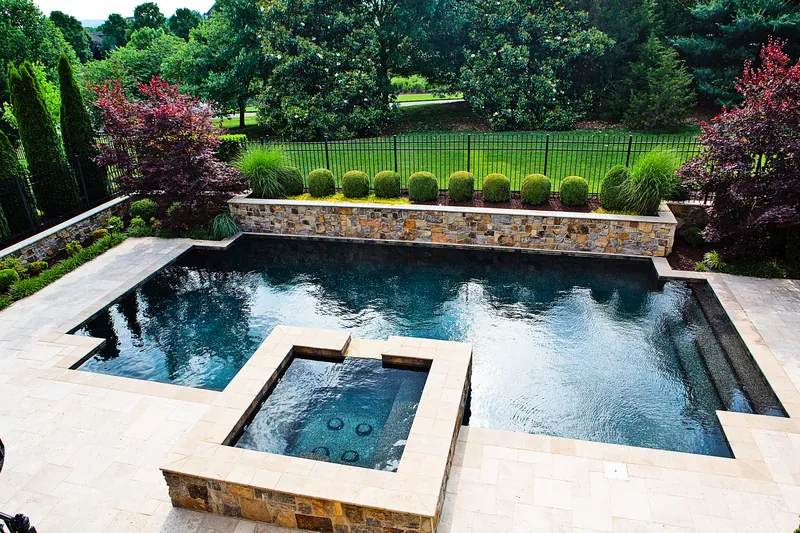
The deck is where people walk, sit and drip. It has to drain, it has to be reasonable to walk on when it is wet, and it has to be built as part of the pool’s electrical bonding system — not as a patio that happens to touch the water. Have a decorative concrete or pool-deck contractor do this work; it is not a Saturday slab.
Coping is not trim
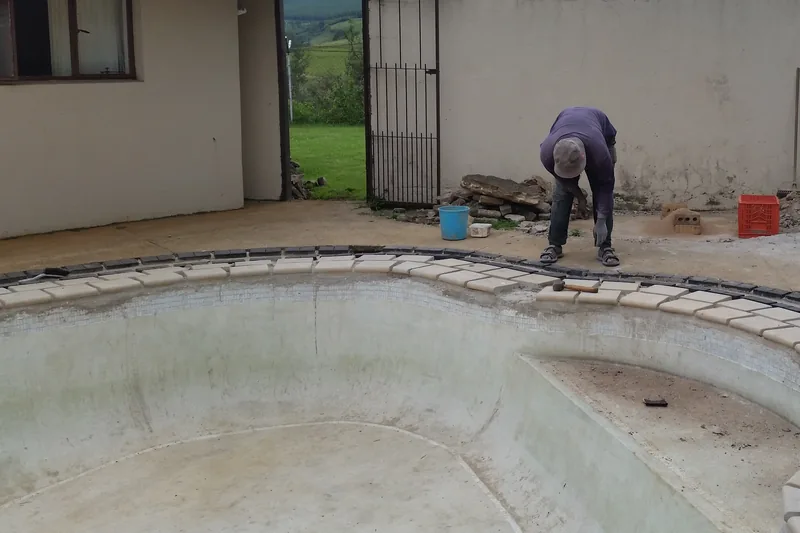
Coping is the cap on the shell: the edge you sit on, the line the water meets, and the joint between the pool and the deck. It has to be securely set, reasonably comfortable, and detailed so water does not sit in the joint. Stone, precast, and concrete coping are all common; the right choice depends on the design and on how the deck will meet it. Have the same project, or at least the same superintendent, own that joint. A coping failure is a leak and a trip waiting to happen, not a cosmetic chip.
Finish choices
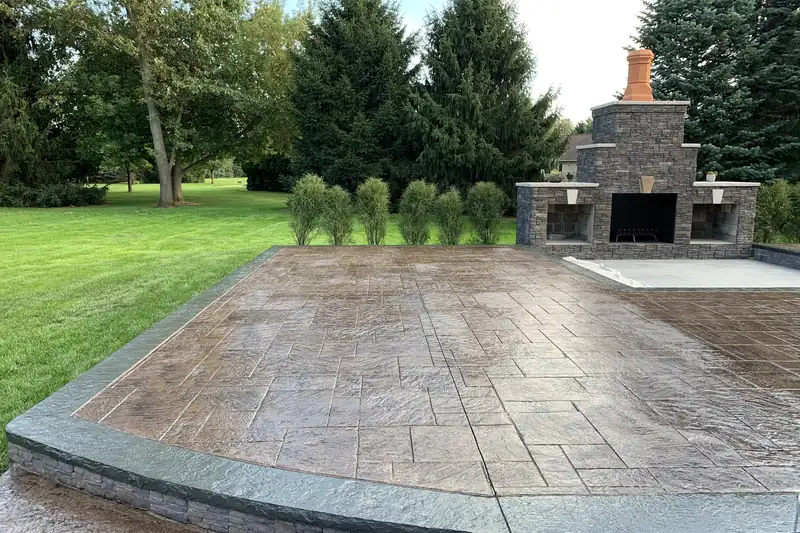
Broom-finished concrete is the workhorse: ridges for traction, simple to repair, honest around a utility set of furniture. Exposed aggregate shows the stone in the mix and keeps a textured walking surface when it is done right. Stamped and colored concrete can mimic stone or tile in one monolithic pour, which is why it shows up on so many pool decks — but a smooth, heavily sealed stamp can be slick when wet. Our stamped vs. plain guide covers the trade-offs; for a pool deck, specifically ask for a texture and a sealer (often with a fine anti-slip additive) rated for wet bare feet. Pavers or stone are a different system, with joints and a setting bed, and they still have to meet the coping and the drain plan.
HomeGuide’s 2026 concrete-pool guide cites building a pool deck at $25 to $50 per square foot depending on the material. Angi lists a wide add-on of $3,000 to $12,000 for decking in its 2026 in-ground guide, which is a reminder that a small allowance will not build a large custom deck. Price the deck as its own scope.
Drainage and slope
Decks should shed water away from the house and, by design, not flood the house or dump dirty runoff straight into the pool. Typical practice is a modest slope away from the water’s edge toward drains or the yard — your builder and local code will set the number. Low spots around the coping are how you get standing water, algae and freeze damage. If the lot falls toward the house, this is a grading problem, not a sealer problem; you may need site work as part of the pool project.
Slip resistance is a specification, not a hope
Wet concrete, wet stone and wet sealer are all more slippery than they look in a showroom photo. Ask to stand on a finished example of the same system, wet, in bare feet if you can do so safely at a completed job. On stamped or troweled work, a texture plus a sealer with a non-slip additive is a normal request, not an upgrade you should feel shy about. Keep the sealer’s recoat schedule in the close-out packet; a glossy recoat years later can undo the traction you paid for. The sealer calculator is a planning tool for later maintenance, not a substitute for the product the installer specifies.
Bonding the perimeter
A pool deck is part of an electrical safety system. The National Electrical Code, Article 680 (as adopted or amended in your area), requires equipotential bonding of the pool and of the perimeter surfaces so that metal parts and the walking surface are at the same potential. In practice that usually means a bonding conductor installed in or under the deck at a specified distance from the wall, tied into the pool’s bonding grid, done by a qualified electrician working with the deck crew.
This is easy to miss if the deck is treated as a separate patio contract. Put bonding in the pool contract, have it inspected where required, and do not let anyone saw or core the deck later without locating that conductor. Your jurisdiction’s adopted code is the rule; the electrician and the building department, not a blog diagram, decide the exact layout.
Hiring the deck work
Use the contractor checklist, and ask for completed pool decks, not just driveways. Expansion joints, the coping joint, drain locations, the sealer, and the bonding should be on the quote. Browse decorative concrete contractors and contractors and finishers, and the pool-work listings on our pools hub.
Common questions
Is stamped concrete a good pool-deck finish?
It can be, when the texture is right and the sealer is chosen for wet traffic. A smooth, glossy stamp is a poor match for a wet deck. Look at finished, wetted examples and get the sealer and recoating in writing.
Why does a pool deck need electrical bonding?
Model electrical codes (NEC Article 680, as adopted locally) require the pool and its perimeter surfaces to be bonded so a fault does not leave the water and the deck at different potentials. It is a safety item, inspected in many jurisdictions, and should be in the contract.
How much does a pool deck cost?
HomeGuide’s 2026 concrete-pool guide cites $25 to $50 per square foot depending on material. Angi lists a broad 2026 add-on of $3,000 to $12,000 for decking. Large or stone decks will run higher; price your square footage as its own line.
Sources
General information for hiring a professional. Codes, soils and climates vary — check your local building department and follow the contract and product instructions. This is not a do-it-yourself guide. Written with 25 years in concrete, from Oregon City, Oregon.